

1. Houses (Bhavas): The 12 areas of human experience (the stages where life happens).
2. Signs (Rashis): The 12 zodiac archetypes (the atmosphere or environment of each house).
3. Planets (Grahas): The 9 celestial actors (the energetic forces delivering karma).
4. Ascendant (Lagna): The rising sign at your time of birth (the reference point that fixes the whole chart).
Here is the step-by-step foundation to read any D1 chart accurately.
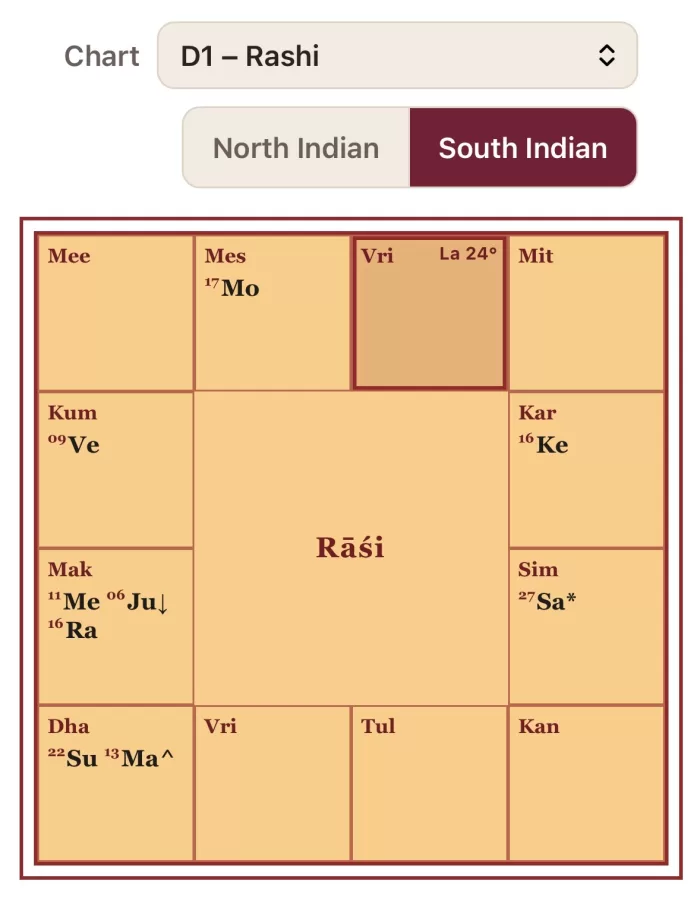
Step 1: Identify the Chart Style and the First House (Lagna)
The layout of a chart depends on the regional tradition used: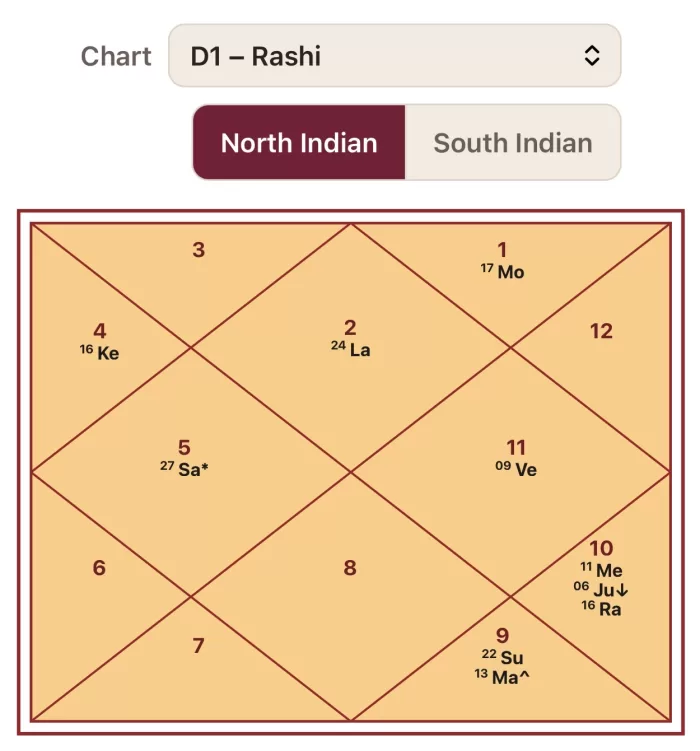
Step 2: Understand the 12 Signs (Rashis) and Their Numbers
In a North Indian chart, the number written in any house tells you which sign occupies that house: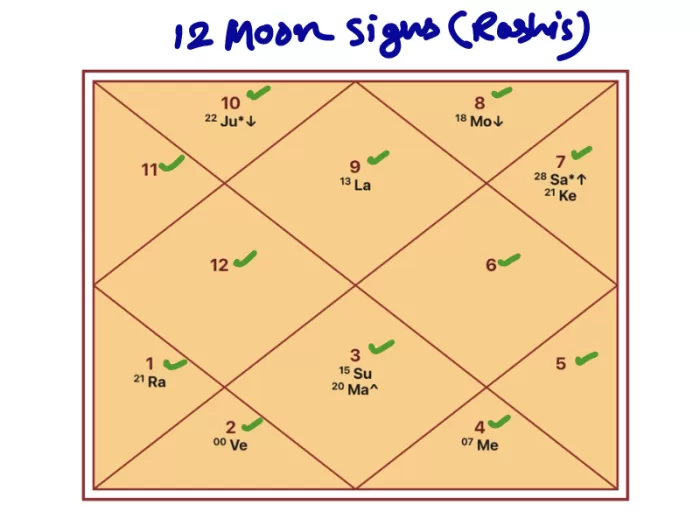
2 - Taurus (Vrishabha), ruled by Venus
3 - Gemini (Mithuna), ruled by Mercury
4 - Cancer (Karka), ruled by the Moon
5 - Leo (Simha), ruled by the Sun
6 - Virgo (Kanya), ruled by Mercury
7 - Libra (Tula), ruled by Venus
8 - Scorpio (Vrishchika), ruled by Mars
9 - Sagittarius (Dhanu), ruled by Jupiter
10 - Capricorn (Makara), ruled by Saturn
11 - Aquarius (Kumbha), ruled by Saturn
12 - Pisces (Meena), ruled by Jupiter
Step 3: Learn the 12 Houses (Bhavas) and Life Domains
Each house governs specific areas of external and internal life: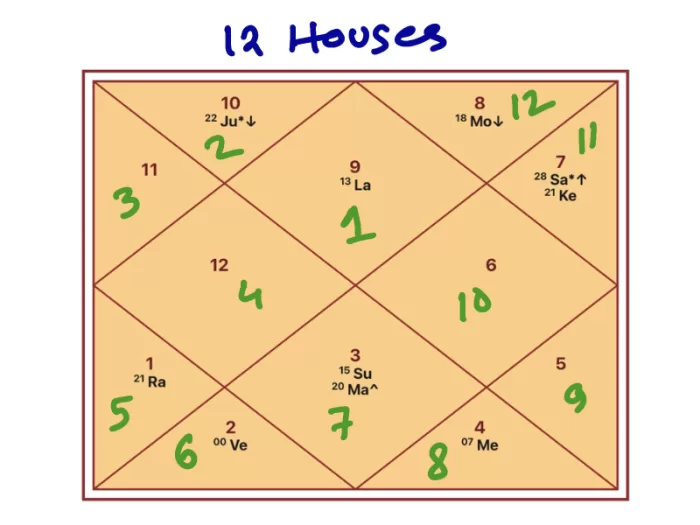
• 2nd House (Dhana Bhava): Wealth, liquid assets, family lineage, early childhood and speech.
• 3rd House (Sahaja Bhava): Courage, self-effort, younger siblings, communication and manual skills.
• 4th House (Sukha Bhava): Inner peace, happiness, mother, home environment, land and vehicles.
• 5th House (Putra Bhava): Intellect, children, creativity, romance and past-life merit (Purva Punya).
• 6th House (Shatru Bhava): Daily work, health issues, debts, enemies, litigation and obstacles.
• 7th House (Jaya Bhava): Marriage, legal contracts, business partnerships and public dealings.
• 8th House (Randhra Bhava): Longevity, sudden changes, hidden knowledge, unearned wealth and chronic crisis.
• 9th House (Dharma Bhava): Higher philosophy, spirituality, guru/teachers, father and fortune (Bhagya).
• 10th House (Karma Bhava): Career, public reputation, social standing, authority and professional legacy.
• 11th House (Labha Bhava): Financial gains, social networks, large communities, elder siblings and fulfilled desires.
• 12th House (Vyaya Bhava): Loss, expenditure, foreign travel/residence, sleep, solitude and liberation (Moksha).
Step 4: Group the Houses by Functional Category
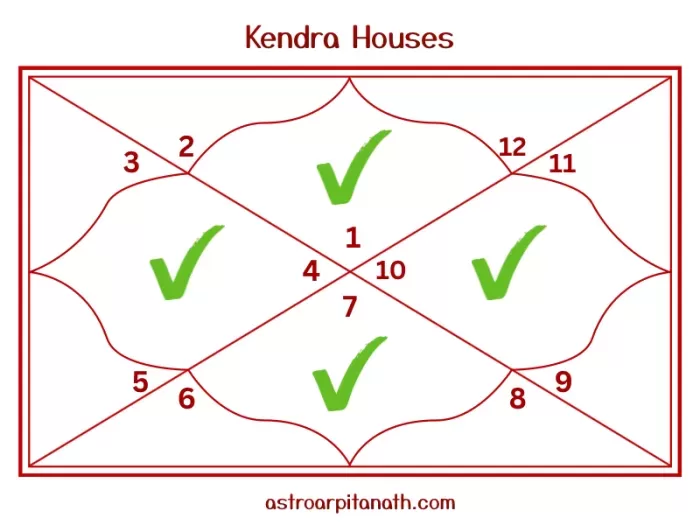
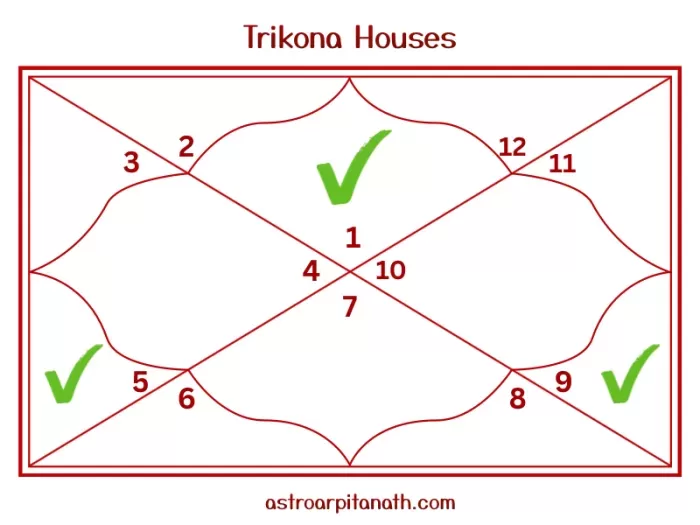
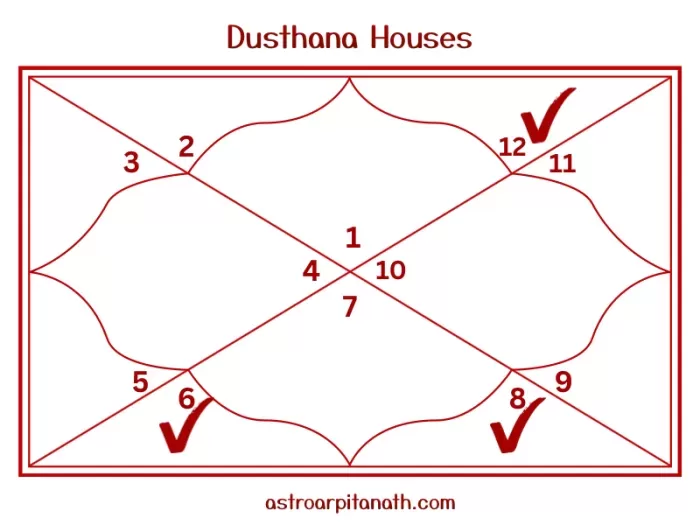
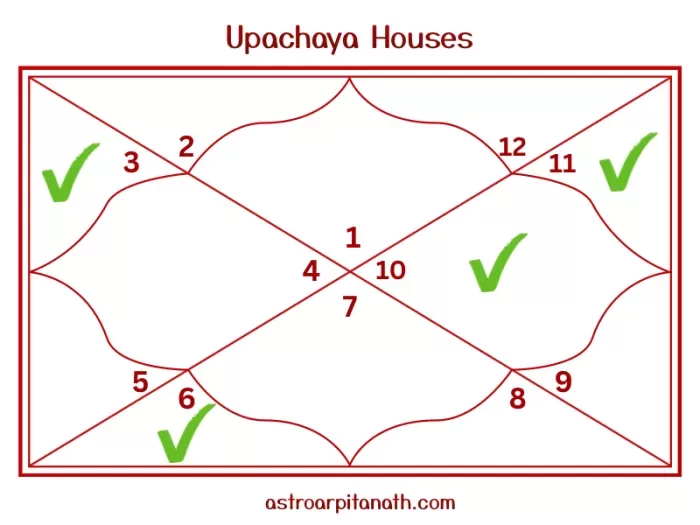
Step 5: Read the Planets (Grahas) in the Houses
Locate where the nine physical and nodal bodies sit: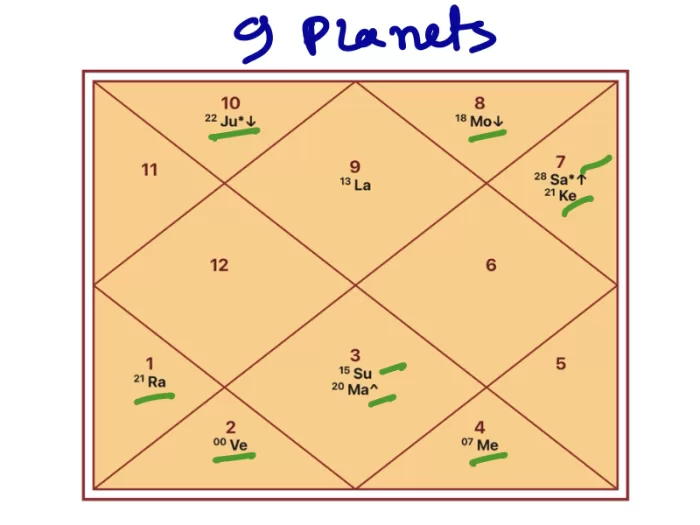
• Moon (Chandra): Mind, emotions, maternal bond, perception and public popularity.
• Mars (Mangal): Drive, energy, courage, siblings, real estate and mechanical skills.
• Mercury (Budha): Communication, commerce, analytical logic, learning and adaptability.
• Jupiter (Guru): Divine grace, morality, wisdom, wealth, children and spiritual teachers.
• Venus (Shukra): Love, marriage, arts, diplomacy, comfort, luxury and vehicles.
• Saturn (Shani): Discipline, time, patience, service, duty, delays and longevity.
• Rahu (North Node): Material obsession, unconventional paths, innovation and foreign influence.
• Ketu (South Node): Detachment, spiritual insight, liberation, research and non-material focus.
Step 6: Check Planetary Dignity and Strength
A planet's ability to deliver positive results depends on its dignity in the sign it occupies:• Exalted (Ucha): The planet is in its highest dignity and functions with strength and confidence (e.g. Sun in Aries, Jupiter in Cancer).
• Own Sign (Swarashi): The planet sits comfortably in its home territory and easily delivers its portfolio (e.g. Mars in Scorpio, Venus in Taurus).
• Debilitated (Neecha): The planet is in its weakest sign, requiring effort, maturity or cancellation (Neecha Bhanga) to produce balanced results (e.g. Moon in Scorpio, Jupiter in Capricorn).
• Retrograde (Vakri): The planet appears to move backward, internalizing its energy and prompting deep re-evaluation in its domain.
• Combust (Asta): The planet sits too close to the Sun, causing its independent significations to be overshadowed by the solar ego.
Beginner’s 4-Step Chart Reading Checklist
1. Find the Lagna: Look at House 1. Note the rising sign number and locate its ruler (Lagna Lord) in the chart to see where your life focus is centered.2. Find the Moon Sign (Janma Rashi): Find the Moon to understand your emotional disposition and mental processing style.
3. Find the Sun Sign: Locate the Sun to understand your professional ambitions, sense of purpose and core willpower.
4. Observe the Kendra and Trikona Houses: See which planets occupy Houses 1, 4, 5, 7, 9 and 10 to identify the primary driving forces of your life.
Next read: Personality Traits by Lagna Lord (Ascendant): How Your Chart Ruler Shapes Your True Self