

The three primary negative/challenging house classifications are Dusthana, Maraka and Trishadaya. Understanding these house groups helps you identify where life demands caution, resilience, inner growth and karmic balancing.
1. Dusthana Houses (The Houses of Suffering & Transformation)
The Dusthana (or Trik) houses are the classic hard-lesson houses of the birth chart: 6th, 8th and 12th.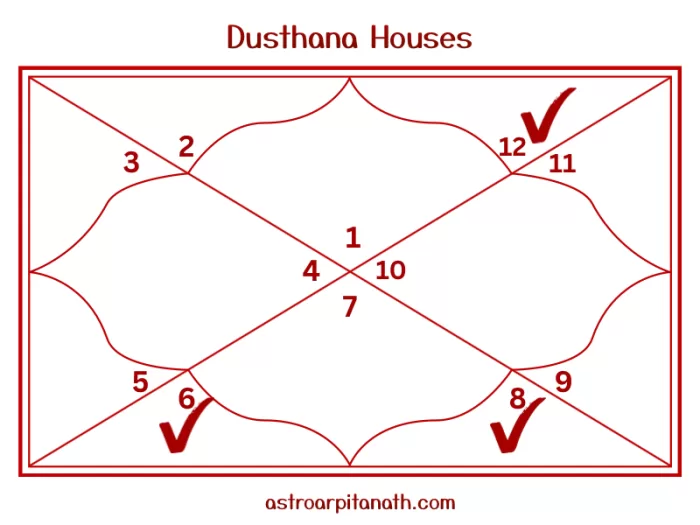
• Governs: Debts/diseases (6th), sudden events/longevity (8th), losses/spiritual liberation (12th).
• The Breakdown:
• 6th House (Roga, Ripu, Rina): Diseases, enemies, debts, arguments and daily hard labor.
• 8th House (Randhra): Sudden ups and downs, longevity, hidden matters, chronic illness and deep transformation.
• 12th House (Vyaya): Expenses, losses, isolation, foreign lands, hospitals and spiritual liberation (Moksha).
2. Maraka Houses (The Killer / Energy-Draining Houses)
The Maraka houses are the death-inflicting or energy-depleting houses: 2nd and 7th.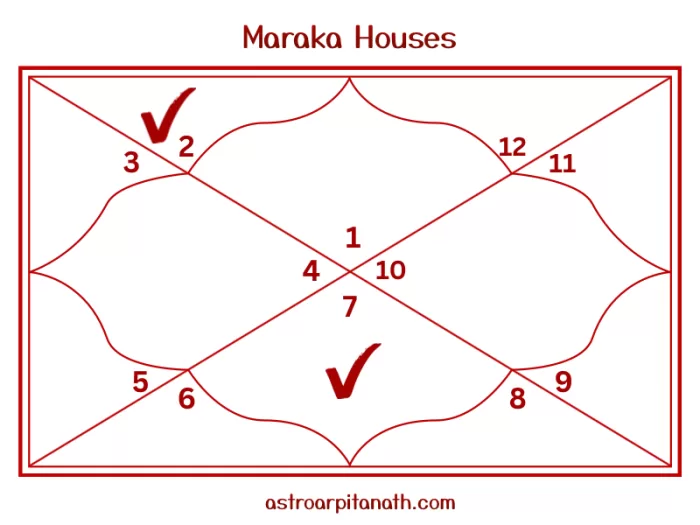
• Governs: Wealth/speech/family (2nd) and marriage/business partners (7th) on a functional level; physical depletion during major Dashas.
• Why the 2nd and 7th?
• The 8th House governs longevity. The house 12th from it (loss of longevity) is the 7th House.
• The 3rd House is a secondary house of life force. The house 12th from it (loss of life force) is the 2nd House.
• Key Feature: During their major or minor planetary periods, Maraka lords can bring physical weakness, severe illness or major life stress if unaligned with positive health factors.
3. Trishadaya Houses (The Houses of Desires & Material Conflict)
The Trishadaya houses are the houses of intense desire and ego: 3rd, 6th and 11th.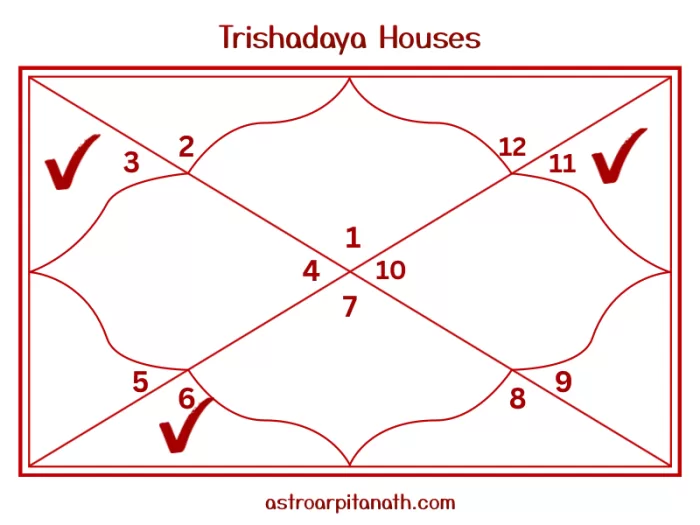
• Governs: Willpower/desire (3rd), struggle/competition (6th), high financial gains/ambition (11th).
• Key Feature: Benefic planets (like Jupiter or Venus) often lose their gentle spiritual sweetness when ruling Trishadaya houses because these houses drive individuals aggressively toward competitive, worldly goals rather than higher consciousness.
The Silver Lining : Vipreet Raj Yoga
In Vedic Astrology, when the ruler of a Dusthana house (6th, 8th or 12th) is placed in another Dusthana house (and not influenced by benefics), it forms a Vipreet Raj Yoga.This unique yoga means "victory out of adversity" - it grants massive wealth, fame or political power that arises directly after or through a major crisis or setback!
Summary
• Dusthana (6, 8, 12): Tests you to build resilience and force spiritual growth.• Maraka (2, 7): Demands physical rest, lifestyle balance and health preservation.
• Trishadaya (3, 6, 11): Fuels personal ambition and material desire, requiring ego control.
Next read: Personality Traits by Lagna Lord (Ascendant): How Your Chart Ruler Shapes Your True Self